

Conference
2017 TGDF Notes: Game AI and Level Difficulty
Speaker | Professor, National Taiwan University of Science and Technology | Wen-Kai Tai
Wen-Kai Tai is a professor at National Taiwan University of Science and Technology and a member of the GAME Research Center and GAME Lab. His work covers Procedural Content Generation, game design automation, game AI, player modeling, multimedia applications, industry-academia R&D, consulting, and government research projects.
─ Excerpted from TGDF official
These are personal notes and may not fully represent the original speaker’s intent.
Other articles in this series
- 2017 TGDF Notes: Creating 3D Japanese Animation Quality in a Small Indie Studio
- 2017 TGDF Notes: Game AI and Level Difficulty
- 2017 TGDF Notes: Finding a Path in a Crowded Market
- 2017 TGDF Notes: Making the Future Present Through Rez Infinite
- 2017 TGDF Notes: Lanota Development Experience
- 2017 TGDF Notes: Postmortem on What Went Right and Wrong
- 2017 TGDF Notes: The Art Direction of Detention
- 2017 TGDF Notes: Visual Design Notes from Qubot
- 2017 TGDF Notes: Survival Rules for Game Software Engineers
AI goals
- Tutorial
- Help new players learn
- Provide different difficulty settings
- Training
- Experienced and competitive players often want to practice
- Strategically practice projects of certain difficulty
- Replayability
- More dynamic game value settings
- Robust to change
- Properties in the game that may need to be adjusted over time
- Maintenance is required every time it is updated, saving programmers valuable time
Game process model
- Game
- Game = current game state + rules/logic
- Current game state = (previous game state + previous player) + player set
- State
- Game state = current game time plus player data such as HP, troop strength, and country
- Player
- Player action decision = player + game status + player information
- Player action decision = composed of multiple different actions
- Player Action (Partial Player)
- Player action = action algorithm + game state + player information
- Example: Are costs considered during production? Are population limits considered?
- AI Portfolio
- AI portfolio = composed of multiple action algorithms
Game case: 8-ball
Game flow:
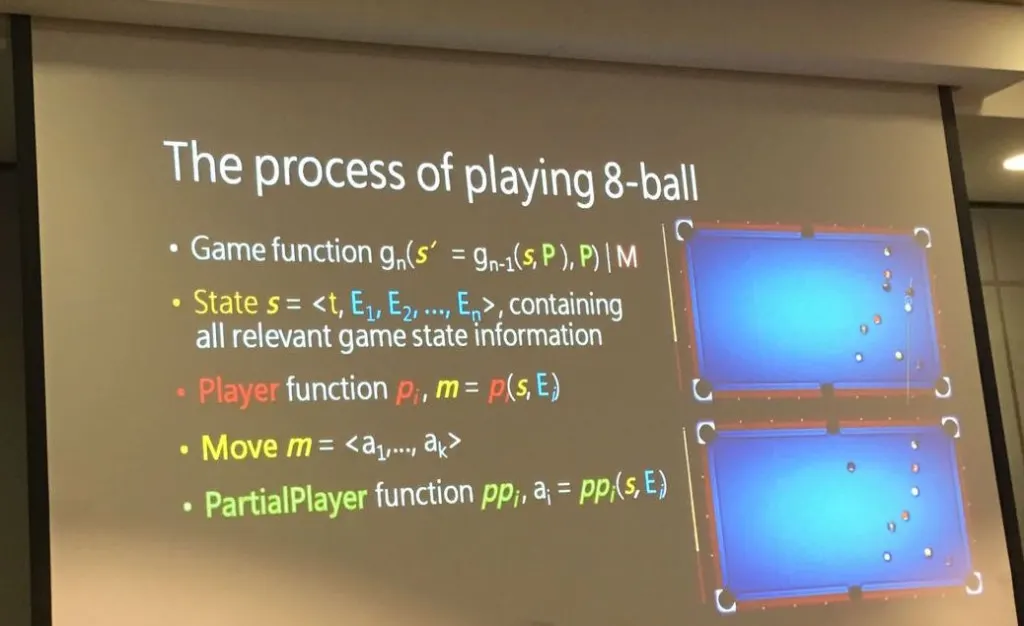
Decision process:
Player portfolio -> Strike action generation -> Table state evaluation -> Ball selection -> Shot execution
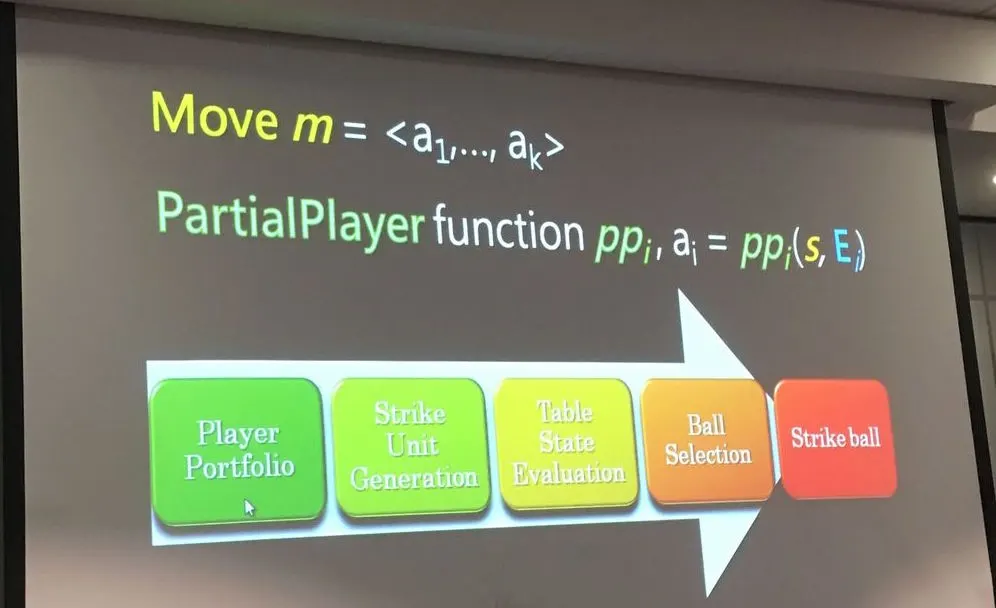
Player portfolio: strategy and skill settings.
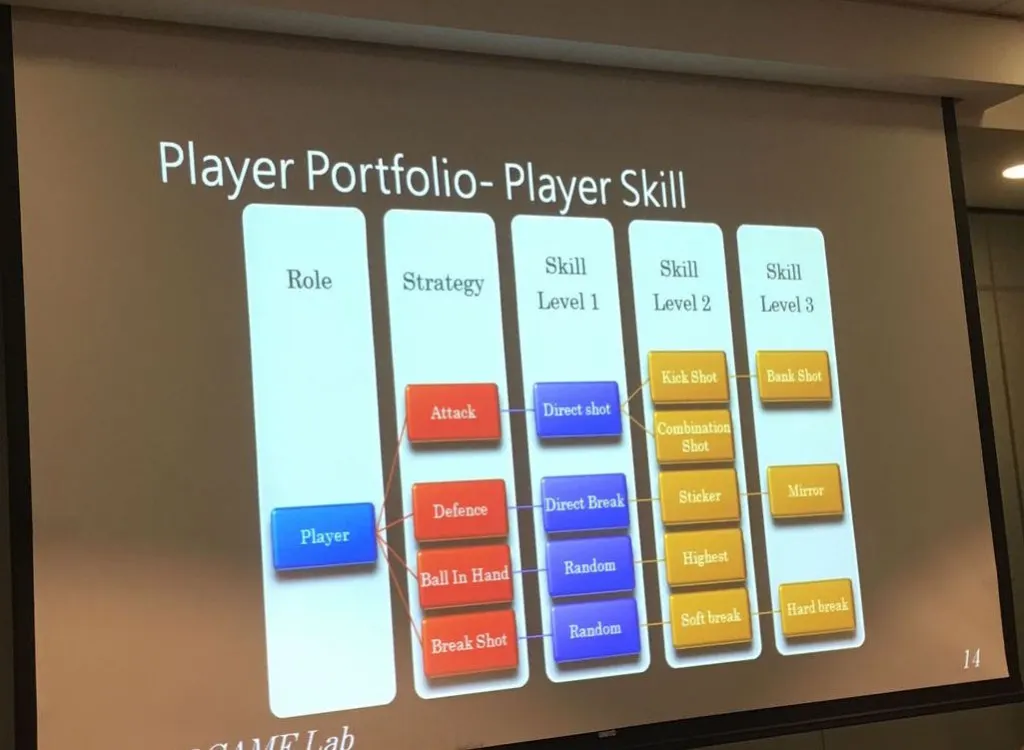
Strike action generation:
Select hittable ball -> Select possible pocket -> Choose shot type -> Refine aim direction -> Search and optimize force
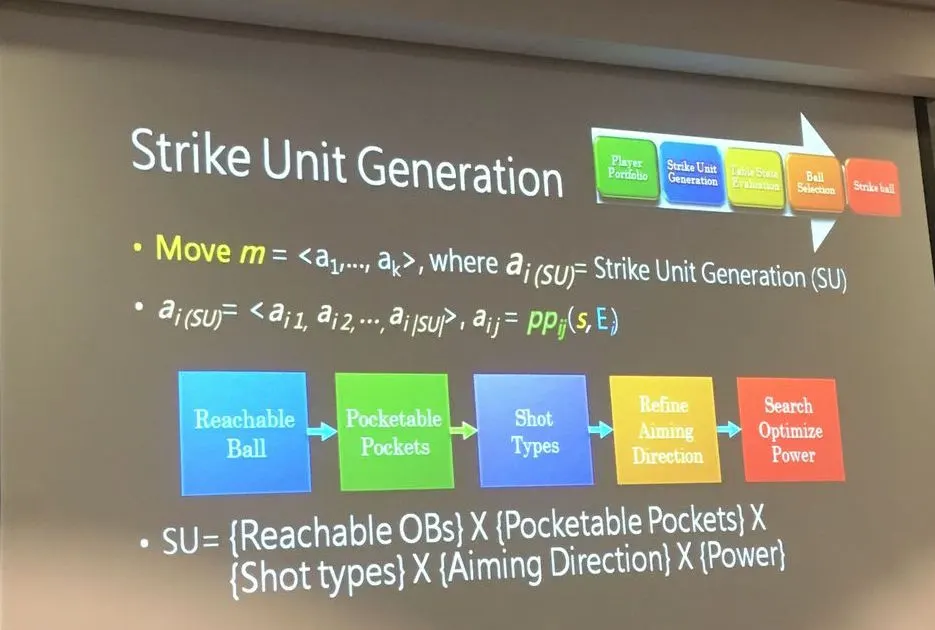
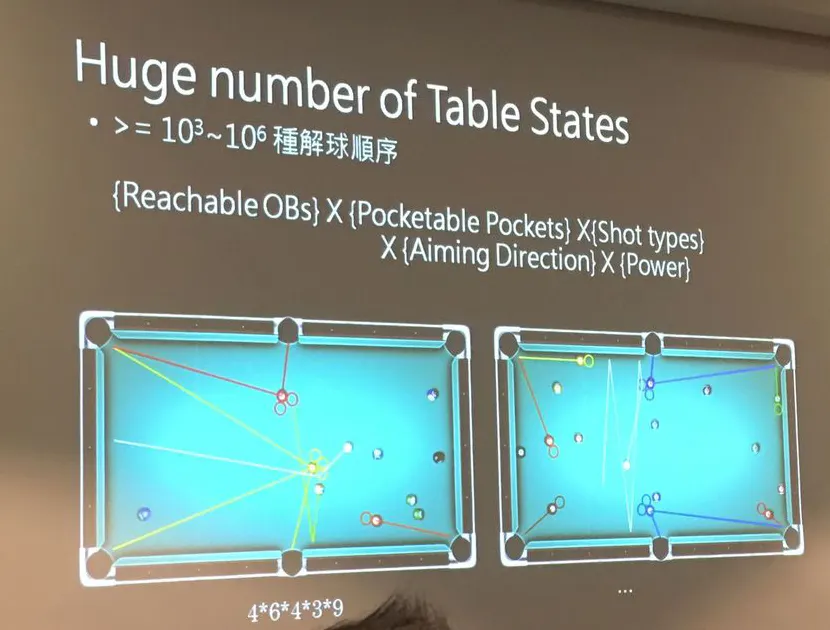
Table state evaluation:
Hit difficulty evaluation -> Ball evaluation -> Ball group evaluation -> Shot evaluation
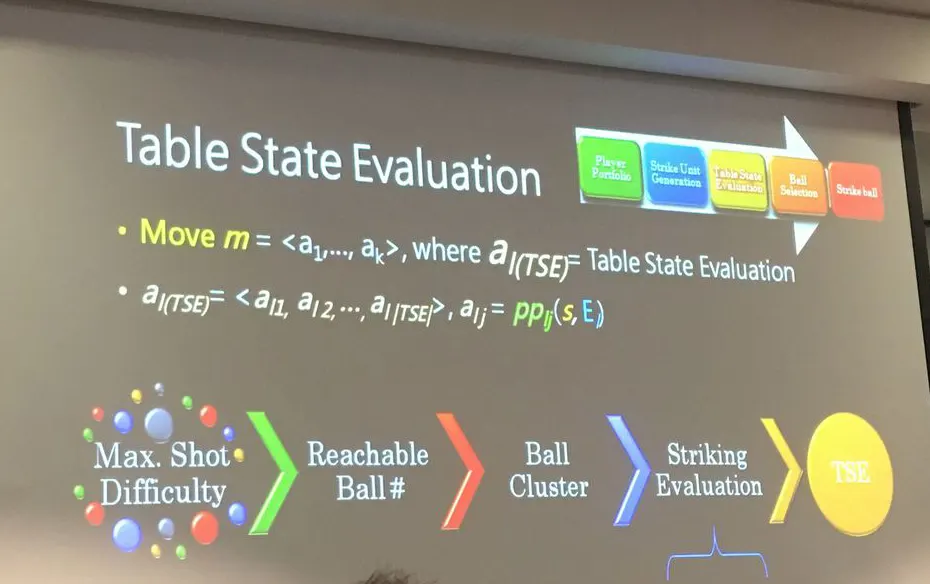
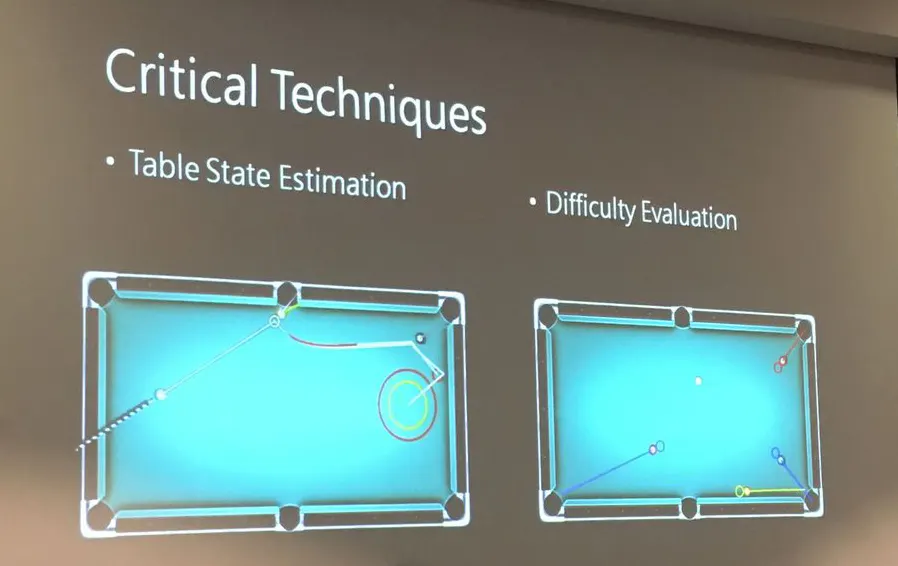
Select target ball:
- Random numbers
- Rule resource size
- Monte Carlo tree search (MCTS) thinking time length
AI portfolio:
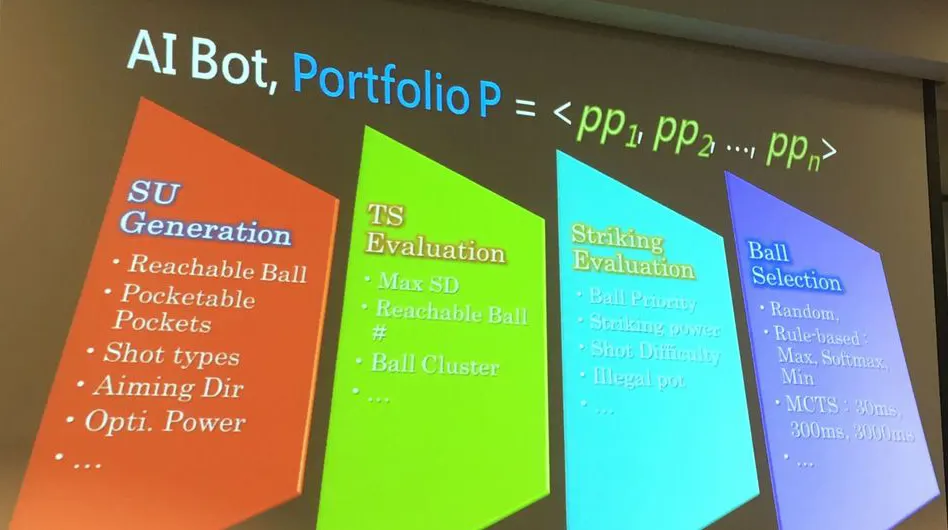
- Shot generation
- Table state evaluation
- Shot evaluation
- Select target ball
Control AI through profiles:
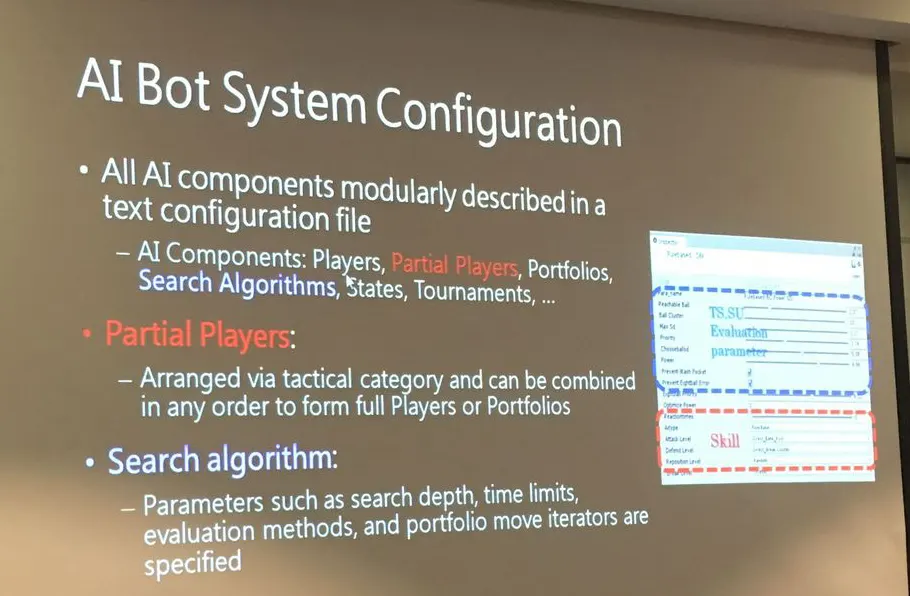
Table state estimation - combat behavior:
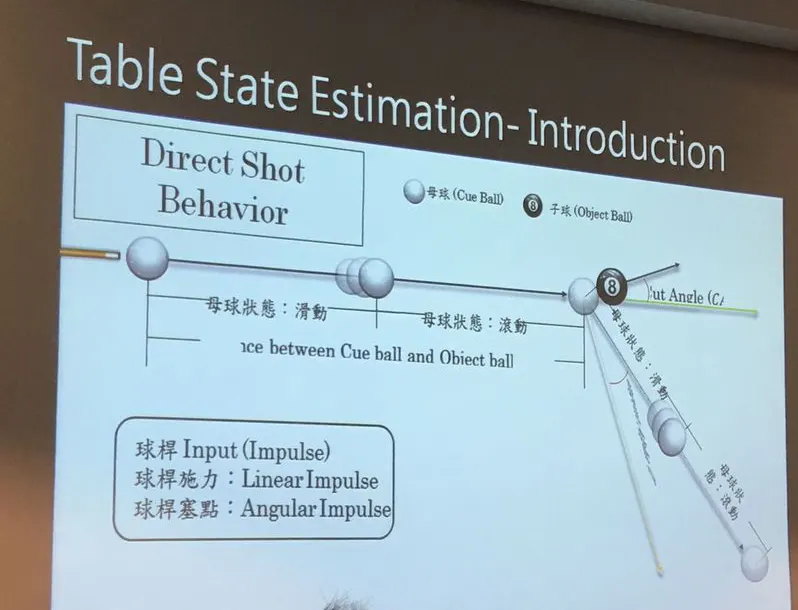
Table state estimation - core process architecture:
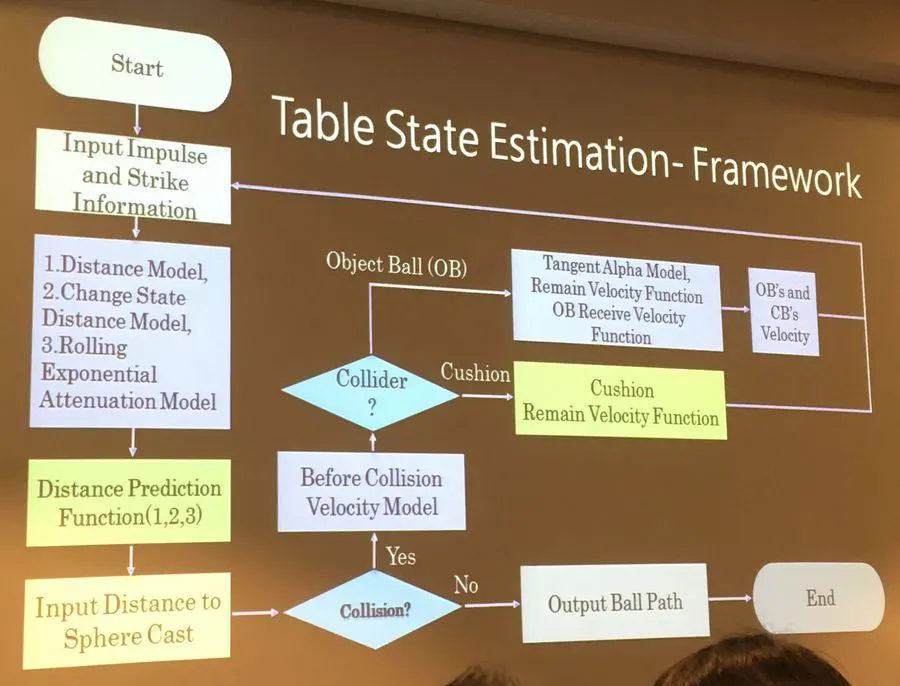
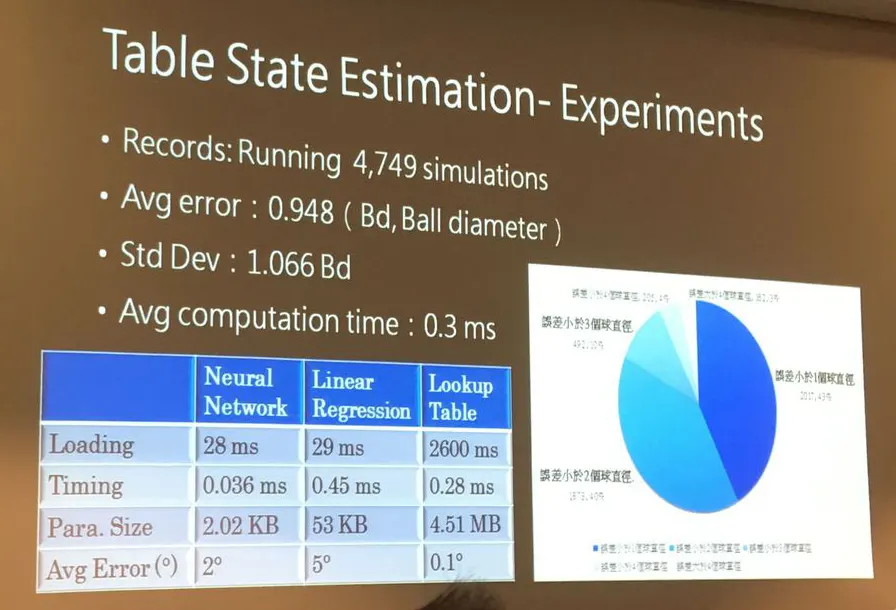
Table state estimation - experimental results:
References
Attribution
Please credit ARKAI Studio and link back to this article when quoting or reposting.